
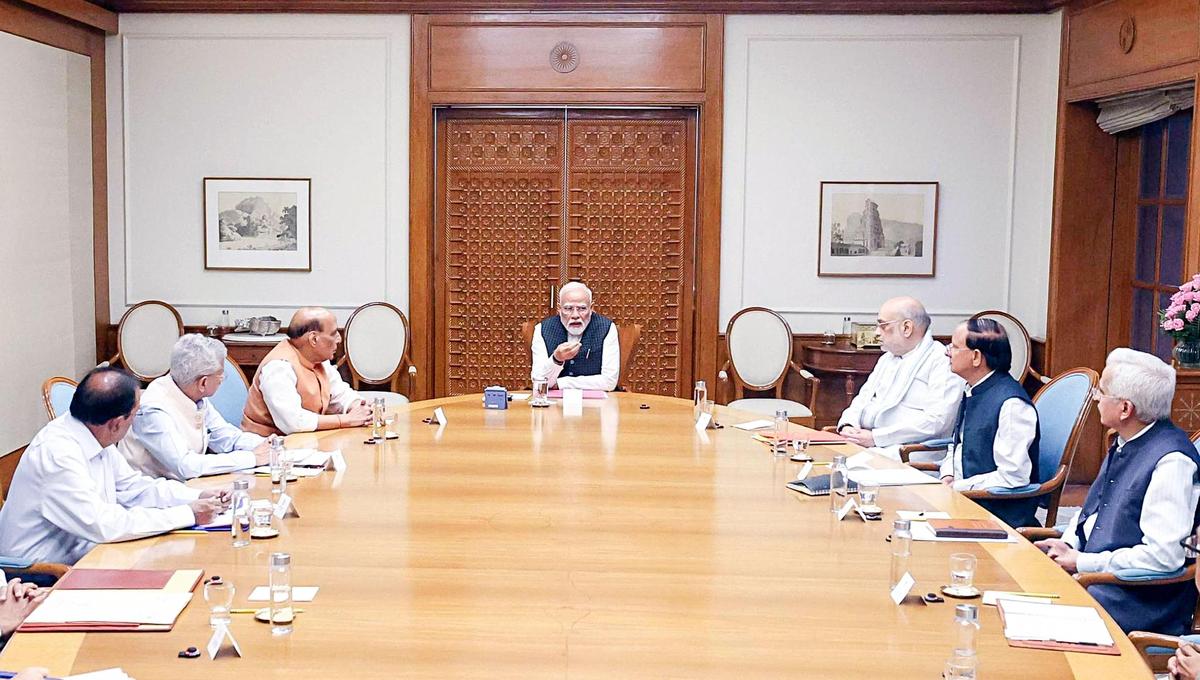
New Delhi: Prime Minister Narendra Modi chaired a crucial late-night meeting of the Cabinet Committee on Security (CCS) in New Delhi on Sunday evening in response to the rapidly escalating conflict in the Middle East.
The CCS, India’s top decision-making body on matters of national security and strategic importance, convened shortly after the PM returned to the national capital from a two-day tour. Key ministers present included Home Minister Amit Shah, Defence Minister Rajnath Singh, External Affairs Minister S. Jaishankar, and Finance Minister Nirmala Sitharaman.
Focus on West Asia Situation and Indian Nationals
The meeting primarily reviewed the rapidly deteriorating geopolitical situation in West Asia following coordinated airstrikes and rising tensions involving the United States, Israel and Iran. Officials were briefed on the recent escalation and discussed possible implications for India’s strategic interests.
A major area of discussion was the safety and security of Indian nationals residing or travelling in the conflict-affected region, particularly those stranded due to disrupted flights and closed airspace. The CCS directed all concerned departments to take necessary and feasible measures to assist Indian citizens affected by the crisis.
Call for Dialogue and Diplomacy
The committee also underscored the importance of an early cessation of hostilities and a return to dialogue and diplomacy to prevent further escalation of violence in the region.
Strategic and Economic Considerations
In addition to security concerns, CCS members examined the potential impact of the crisis on vital supply chains, including energy imports, and assessed contingency plans for India’s broader strategic and economic interests.
The high-level meeting reflects New Delhi’s heightened vigilance amid global uncertainty and its commitment to protecting Indian citizens and national interests.